
Are you asking, “How to floss with braces in Bakersfield and Tehachapi, CA”? Cleaning around brackets and wires can be tricky at first. However, the process becomes simple with the right tools and easy flossing techniques. Flossing regularly is an important step for good oral hygiene. It keeps your teeth and gums healthy, making your treatment more effective.
Read on for easy flossing tips and orthodontist-recommended tools from OrthoArts in Bakersfield and Tehachapi, CA.
Why Flossing Is Necessary During Orthodontic Treatment
Braces are great for straightening teeth, but they also make cleaning harder. Food debris and plaque often get stuck around archwires and brackets. Neglecting to clean these areas can lead to tartar, tooth decay, and periodontal disease. Flossing removes what brushing alone misses and helps keep your gumline strong and clean. When your mouth is properly cleaned, your braces move your teeth more efficiently, reducing the risk of complications. Daily flossing is a small effort that makes a big difference.
Best Tools for Flossing with Braces
Using the right floss tools can make flossing around braces simple and effective. These tools are designed to work with your orthodontic hardware and ensure a thorough clean:
Floss Threaders
A floss threader works like a needle. It guides dental floss under your braces’ wires, letting you remove plaque from between your teeth without any trouble. Orthodontists at OrthoArts in Bakersfield provide their patients access to these helpful tools.
Water Flossers
A water flosser (or oral irrigator) uses a jet of water to clean deep between teeth and around wires and brackets. It is a great choice for people with sensitive gums or anyone who struggles with traditional floss. Using a water flosser daily makes orthodontic care less time-consuming and more effective.
Superfloss
Superfloss is pre-cut floss with both stiff and spongy parts. The stiff end allows it to slide under archwires, while the spongy center cleans around brackets and tight spaces. It is a smart option for hard-to-reach areas. As Dr. Jeryn Jacob, a skilled orthodontist in Sunnyvale, TX, highlights, superfloss is particularly suited for cleaning under wires and around brackets without causing damage.
Interdental Brushes
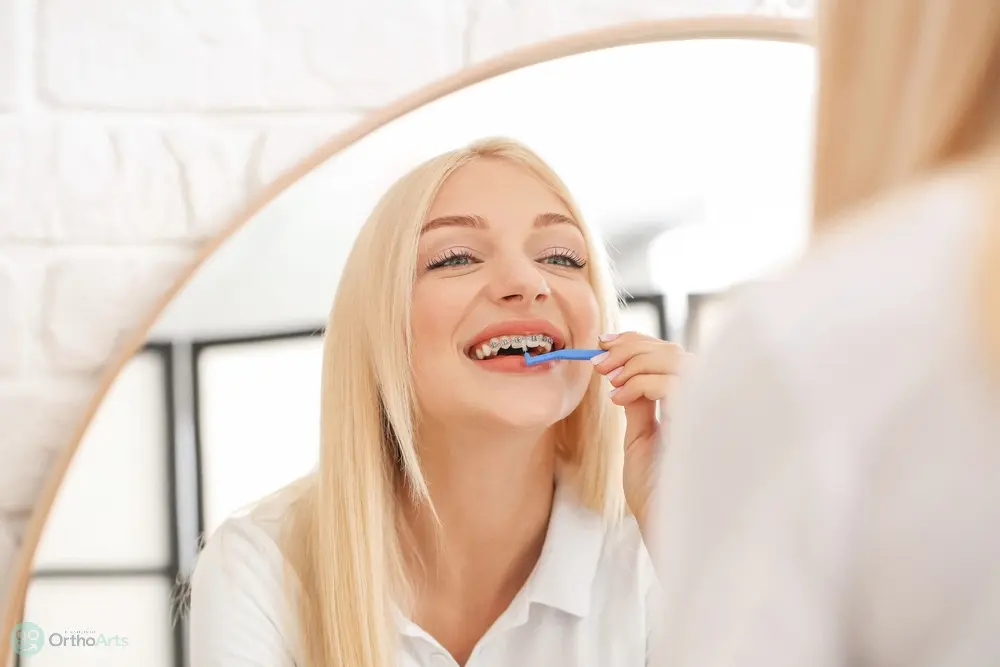
An interdental brush (also called a proxabrush) is a small tool with bristles designed to fit between your teeth. This makes it easier to clean the areas where food tends to stick. It’s particularly useful for cleaning underneath braces’ wires.
Floss Picks
Floss picks combine a handle and a piece of floss. These are simple to use and help clean around braces when traditional floss becomes difficult to thread. They provide convenience without much effort.
Where to Find Flossing Tools
You can find these dental cleaning tools at most drugstores or online. OrthoArts in Bakersfield and Tehachapi provides starter kits for patients to help keep proper dental hygiene routines during treatment. Their team will guide you on how to use these tools effectively.
Step-by-Step Guide: How to Floss with Braces
Here’s a simple way to floss around braces:
Step 1: Prep Your Floss
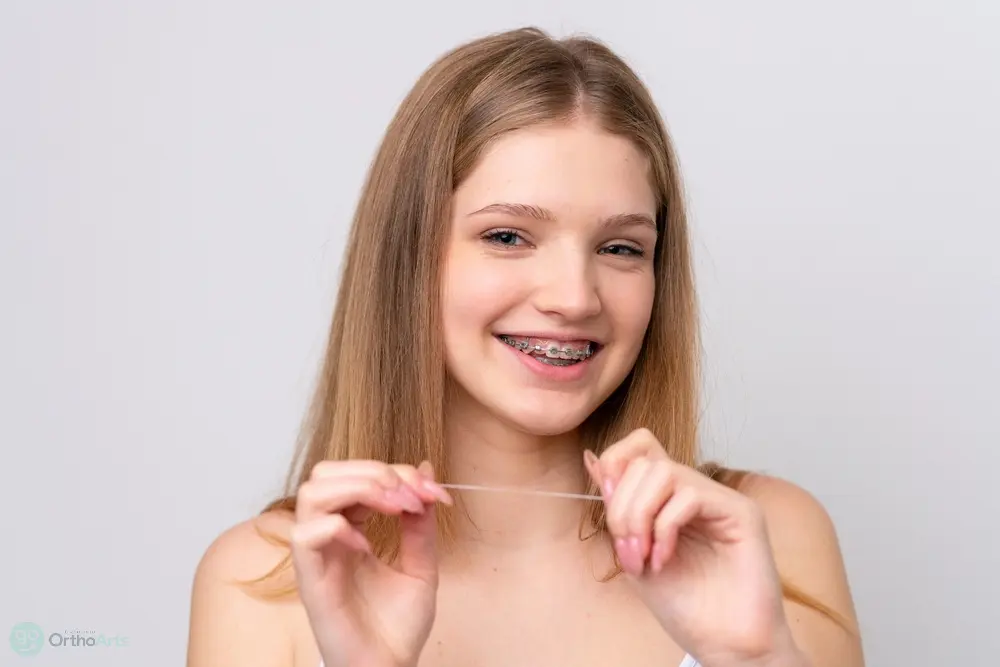
Cut about 18 inches of floss and thread it under the braces’ wire. You can use a floss threader to make the process easier. Take your time to guide the floss gently so it doesn’t get stuck or fray. Make sure you have a good grip on both ends to control the movement.
Step 2: Clean Each Tooth
Wrap the floss around each tooth in a “C” shape. Slide it gently between your teeth and along the gumline. Remove food debris and plaque without snapping or pulling too hard, which can irritate your gums.
Step 3: Use a Water Flosser for Extra Cleaning
For thorough cleaning, aim a water flosser at tricky areas like the back teeth and around brackets. Adjust the pressure as needed for your gum sensitivity. A water flosser can wash away hidden food and bacteria more effectively. Use warm water if your gums are sore for a soothing feel.
Step 4: Follow Up with Brushing
After flossing, brush your teeth with a soft-bristle toothbrush and fluoride toothpaste. Clean carefully around wires and brackets, using circular motions for a gentle but thorough clean. Finish with a rinse of fluoride mouthwash to protect against tooth decay.
Flossing Tips Based on Braces Types
- Metal Braces: Use patience when threading floss under archwires to clean between teeth.
- Clear Ceramic Braces: Be extra gentle when flossing around these brackets to avoid scratches or chips.
- Lingual Braces: These braces sit behind your teeth, so cleaning them may require a water flosser or interdental brushes for better precision.
- Self-Ligating Braces: Although these have fewer components, consistent flossing is still necessary to keep gums healthy and free of plaque.
Fixing Common Flossing Challenges
Sensitive Gums
If your gums feel tender when you floss, use warm saltwater rinses. Floss with care and avoid pressing too hard. Over time, your gums will become healthier and less sensitive. You can also use toothpaste made for sensitive teeth to ease discomfort. Try flossing at night when your gums are more relaxed.
Hard-to-Reach Areas
Tight spots around brackets and wires can be frustrating. Use specialized tools like water flossers, superfloss, or interdental brushes to clean these areas. These tools help remove food that regular floss might miss. Take your time and move slowly to avoid bending the wires. Cleaning these small spaces each day helps prevent plaque and gum swelling.
Struggles with String Floss
If traditional floss feels slow or frustrating, try pre-threaded floss picks. They are easier to manage, especially when you’re in a hurry. Floss picks are small, travel-friendly, and simple to use anywhere. Keep a few in your bag or locker for quick cleaning after meals.
OrthoArts Support for Orthodontic Care
At OrthoArts, we’re dedicated to making your braces journey as smooth as possible. We provide:
- Flossing Instructions: Our team gives hands-on tips to help you perfect your flossing technique.
- Starter Kits for Cleaning: Get tools like floss threaders, water flossers, and other essentials.
- Expert Advice: We provide solutions for challenges like tartar, tooth decay, and gingivitis.
Oral Hygiene After Braces
Even when your braces come off, good oral hygiene routines remain important. Protect your straightened smile with these tips:
- Clean Your Retainer: Wash your retainer daily to prevent plaque buildup.
- Floss Daily: Keep up with daily flossing to maintain healthy teeth and gums.
- Brush Properly: Brush twice a day for two minutes each time using toothpaste with fluoride.
Take Control of Flossing with Braces
Flossing with braces may feel like a challenge at first. But with the help of the right flossing tools and a bit of guidance from OrthoArts in Bakersfield and Tehachapi, CA, you can protect your smile easily. Proper dental care during treatment keeps your teeth and gums healthy and sets you up for success. Schedule an appointment today for more tips on keeping your braces clean and your smile bright.
About The Authors
Dr. Jared Gianquinto – Orthodontist in Bakersfield and Tehachapi, CA
Dr. Jeryn Jacob – Orthodontist in Sunnyvale, TX
Frequently Asked Questions
What to do if there is no floss?
There are other things you can use if you’re stuck. A clean thread or thin strip of cloth can work. A toothpick or an interdental brush can help too. If you have a water flosser, that’s even better. In a pinch, you can swish water or mouthwash around your mouth to loosen food. These are not perfect, but they’re better than doing nothing. Just be gentle so you don’t hurt your gums.
How long can I go without flossing with braces?
It might be tempting to skip flossing with braces, but it’s best not to. Brackets and wires trap food and plaque fast. You should floss every day if you can. At most, try not to go more than a day or two without flossing. If regular floss is too hard to use, try floss threaders, picks, or small brushes made for braces. Keeping up with flossing will protect your teeth and gums while you wear braces.
Does flossing speed up braces?
Flossing does not make your braces work faster, but it’s still very important. It keeps your teeth and gums clean, which helps your treatment stay on track. Without flossing, you risk cavities, swollen gums, or stains that can slow things down. Think of flossing as support for your braces; it keeps your mouth healthy so you get the best results when your braces come off.